This itinerary is an engaging journey through the origins, memories, and living expressions of the Angolan capital. Throughout this route, visitors are invited to discover the city where the colonial past, the struggle for independence, and the vibrant contemporary identity intertwine in a unique way. More than just a simple tour, this itinerary provides direct contact with Luanda’s traditions, art, music, and daily life, highlighting the city’s tangible and intangible heritage.
Route Map
Additional Information
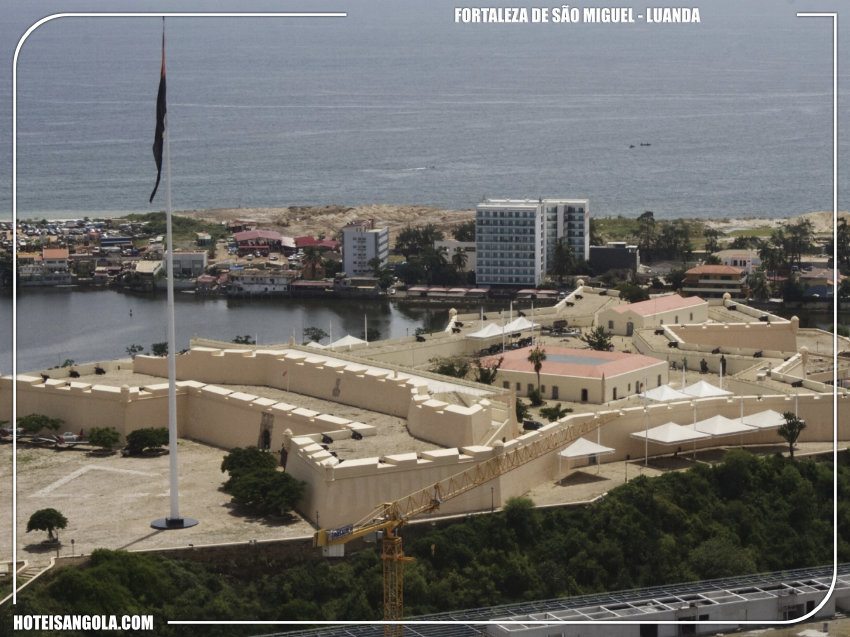
Fortress of São Miguel - located on Fortaleza hill (formerly Mount São Paulo), near the bridge to Luanda Island, in the commune and municipality of Ingombota, city and province of Luanda, Angola. In addition to being an “ex libris” of the Angolan capital, it stands out for being the only African fortification where artillery pieces were cast...
Iron Palace - The history of the building is shrouded in mystery, as there are no records of its origin. It is believed that the wrought iron structure was built in the 1880s or 1890s in France as a pavilion for an exhibition, later dismantled and transported by ship, likely destined for Madagascar. There is some speculation about how it arrived in Angola. According to some sources, the ship carrying it was diverted from its route by the Benguela Current, wrecking near the Skeleton Coast in Angolan territory...
National Museum of Slavery - Created in 1977 by the National Institute of Cultural Heritage with the aim of making known the history of slavery in Angola, the National Museum of Slavery is headquartered in the Chapel of the Casa Grande, a 17th-century temple where slaves were baptized before boarding slave ships bound for the American continent. The museum, which gathers and exhibits hundreds of items used in the slave trade, is installed on the former property of Captain of Grenadiers D. Álvaro de Carvalho Matoso, Knight of the Order of Christ...
Armed Forces Museum - Established in 1975, after Angola’s independence, the Armed Forces Museum is housed in the Fortress of São Miguel. The museum’s collection includes twin-engine aircraft, battle tanks, various weapons, and artifacts used during the War of Independence and the Civil War, notably a bust of the war leader and first President of the Republic of Angola, Agostinho Neto. The museum also displays several statues that once adorned avenues and squares of colonial Luanda and were removed after independence...
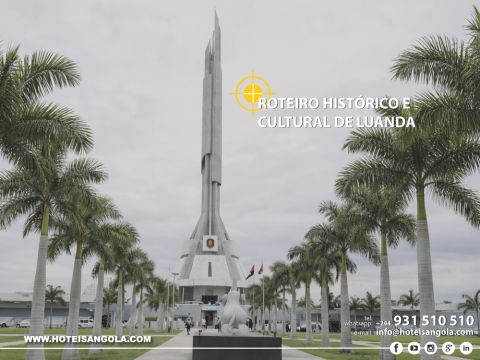
Dr. António Agostinho Neto Memorial - The Dr. António Agostinho Neto Memorial, also known as the Rocket, is a monument built in the capital Luanda in honor of António Agostinho Neto, Angolan physician, writer, and politician, the country’s leading figure in the 20th century. After Agostinho Neto’s death on September 10, 1979, in the former Union of Soviet Socialist Republics, the Angolan Government commissioned the former USSR to design and build a Mausoleum to house the President’s mortal remains. The laying of the foundation stone took place on September 17, 1982, by the then President of the Republic, José Eduardo dos Santos....
National Museum of Natural History of Angola - With the purpose of promoting scientific knowledge, under the supervision of the Executive and overseen by the Ministry of Culture, Tourism and Environment through the National Institute of Cultural Heritage. Its function is to preserve, through research, projects and biodiversity conservation actions, environmental and heritage education activities, and its collection, which covers the areas of zoology, botany, paleontology and natural heritage...
National Museum of Anthropology - Founded on November 13, 1976, the National Museum of Anthropology was the first museum institution created after Angola’s independence the previous year. This scientific, cultural, and educational institution is dedicated to the collection, research, conservation, promotion, and dissemination of Angolan cultural heritage. The National Museum of Anthropology consists of 14 rooms spread over two floors housing traditional items, namely agricultural, hunting and fishing utensils, iron smelting artifacts, musical instruments, jewelry, bark cloth pieces, and photographs of the Khoisan peoples...
Available daily from 08:00 to 22:00. This support line helps clarify doubts,
assist with reservations and guide you towards the best accommodation and tourism services.